Don't miss our holiday offer - up to 50% OFF!
Wish You vs Wishing You: Simple Rules for Everyday English

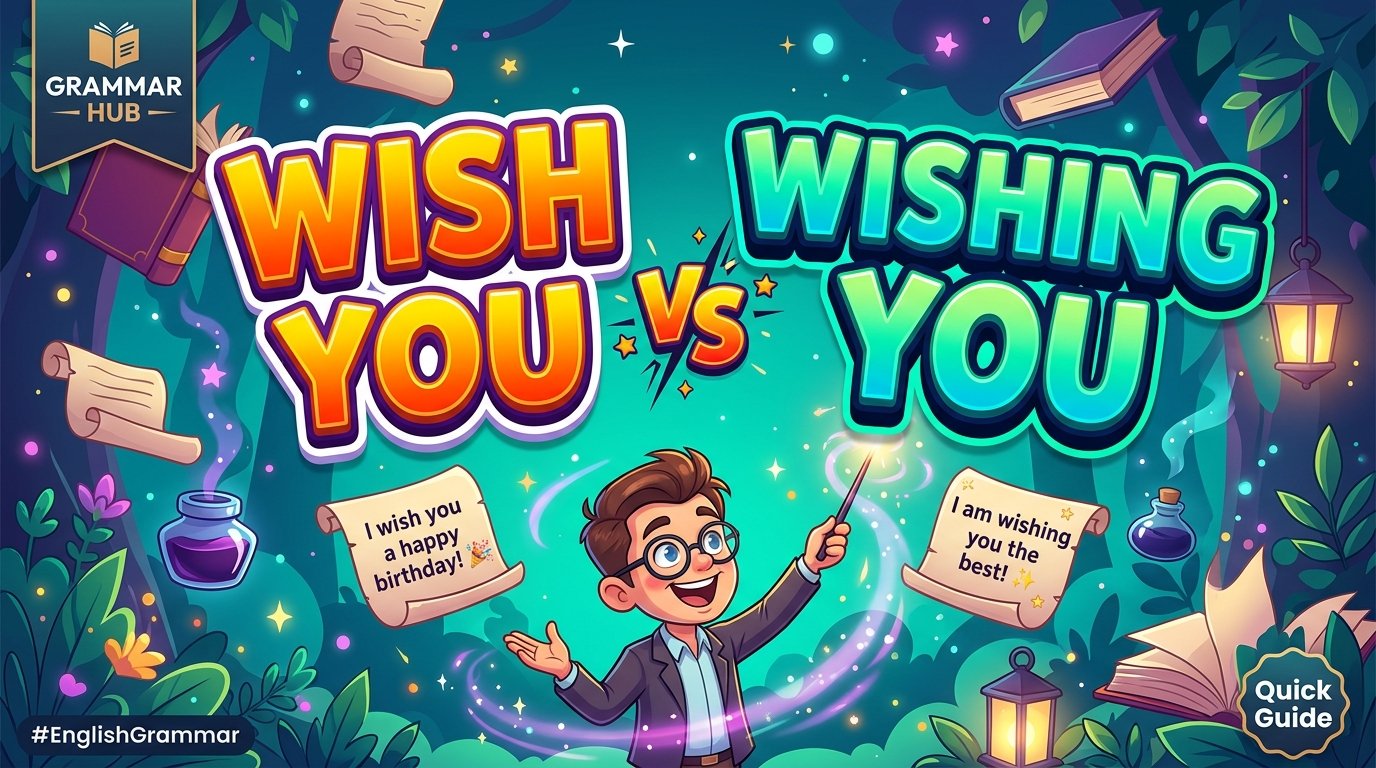
Have you ever paused before writing a birthday message or a professional email because you were unsure whether to say “Wish you all the best” or “Wishing you all the best”? Both expressions sound natural, but they have slightly different uses. Understanding wish you vs wishing you can help you write better messages and avoid common grammar mistakes.
Quick Answer
The main difference between wish you vs wishing you is their grammatical form. “Wish you” uses the base verb and often works as a shortened greeting, while “wishing you” uses the -ing form and sounds natural in greetings, messages, and email closings. Both can be correct when used in the right context.
What Each Term Means
Before comparing the two expressions, it helps to understand their basic meanings. Both communicate goodwill, hope, or a positive feeling toward another person, but they use different verb forms.
1. What Does “Wish You” Mean?
“Wish you” means that you hope someone receives or experiences something good. It is common in greetings and short messages.
For example:
- Wish you a very happy birthday!
- Wish you good luck with your new job.
- Wish you a wonderful holiday.
- Wish you success in your studies.
In these sentences, the speaker expresses a positive hope for someone else. The full grammatical structure often includes an understood subject, such as “I,” especially in informal greetings.
A complete sentence would be:
“I wish you a happy birthday.”
However, people often remove “I” to make greetings shorter and friendlier. This is common in everyday communication.
2. What Does “Wishing You” Mean?
“Wishing you” uses the present participle form of the verb “wish.” It expresses a current hope or positive feeling toward someone.
For example:
- Wishing you a happy birthday!
- Wishing you good health and happiness.
- Wishing you success in your plans.
- Wishing you a peaceful weekend.
This expression is especially popular in greeting cards, social media posts, and professional emails.
It can also appear in a longer sentence:
“I am wishing you all the best for your future.”
In many greetings, the words “I am” are understood rather than written. This makes the expression short, warm, and pleasant.
Wish You vs Wishing You: The Core Rule, Explained Once
The key difference comes from verb form and sentence structure. “Wish” is the base form of the verb, while “wishing” is its present participle form. The base form can follow a subject such as “I,” while the -ing form normally needs an auxiliary verb in a complete progressive sentence.
Consider these structures:
- I wish you a wonderful day.
- I am wishing you a wonderful day.
Both are grammatically complete. However, the first is more direct and straightforward. The second places more focus on the act of expressing the wish.
There is also a common greeting style in English:
- Wish you a wonderful day!
- Wishing you a wonderful day!
These are shortened expressions. The first leaves out the subject “I.” The second leaves out the subject and auxiliary verb that would normally form a complete sentence.
This type of shortening is common in greetings because the meaning is easy to understand from the situation.
One useful point is that “wish” can also introduce a different kind of sentence:
“I wish I had more time.”
Here, the speaker expresses a desire for something that is not currently true. This is a separate use of the verb and should not be confused with sending someone a greeting.
English has many expressions where a small verb change affects meaning. A similar point appears in appreciate it vs appreciated it, where the verb form helps show the time and context of an action.
Examples in Context
The following examples show how wish you vs wishing you works in different everyday situations, from personal messages to workplace communication. Notice how the setting influences which expression sounds more natural.
- Birthday message: I wish you a day filled with laughter, love, and wonderful memories.
- Wedding card: Wishing you a lifetime of happiness, trust, and beautiful moments together.
- Job interview: I wish you the very best of luck with your upcoming interview.
- Holiday greeting: Wishing you a relaxing vacation and plenty of exciting adventures.
- Professional email: Wishing you continued success in your career and future projects.
- Exam message: I wish you confidence and success as you prepare for your final exams.
- New business: Wishing you great success as you launch your new business.
- Get-well message: I wish you a quick recovery and better health in the coming days.
- New year greeting: Wishing you peace, prosperity, and fresh opportunities this year.
- Farewell message: I wish you happiness and success wherever your next journey takes you.
Common Mistakes
When learning wish you vs wishing you, people sometimes mix up incomplete sentences, verb forms, and greeting styles. Here are five mistakes to avoid.
- Wrong: I wishing you a happy birthday.
Right: I am wishing you a happy birthday.
Why: The -ing form needs an auxiliary verb in this sentence. - Wrong: I am wish you good luck.
Right: I wish you good luck.
Why: Use the base verb after “am” only when the sentence structure calls for an -ing form. - Wrong: Wishing you are a wonderful day.
Right: Wishing you a wonderful day.
Why: The greeting does not need “are” before the noun phrase. - Wrong: I wish to you all the best.
Right: I wish you all the best.
Why: In this structure, the person receiving the wish comes directly after “wish.” - Wrong: I wishing all the best for your examination.
Right: Wishing you all the best for your examination.
Why: The shorter greeting does not need an extra subject and auxiliary verb.
Tricky or Edge Cases
Although these phrases are simple, a few situations can make the choice less obvious. The surrounding words and the purpose of the sentence can change which form works best.
When using “I wish you”: This is a complete and direct expression. It works well in both personal and professional communication.
Example: “I wish you every success in your new position.”
When using “Wishing you” at the end of an email: This is a common way to make a closing sound warm and polite.
Example:
“Thank you for your time and support.
Wishing you a pleasant week ahead.”
When using “I am wishing you”: This is grammatically possible, but it may sound less natural than the simple present form in many everyday greetings. Most speakers prefer “I wish you” or the shortened greeting “Wishing you.”
When expressing an unreal desire: The verb “wish” has another grammatical use.
Example: “I wish I could travel more often.”
This sentence describes a personal desire, not a greeting for another person.
How to Remember It
A simple way to remember wish you vs wishing you is to focus on the sentence structure.
Use “wish you” when you want to make a direct statement about your hopes for someone. Use “wishing you” when writing a friendly greeting, card, or email closing.
Remember these two examples:
- I wish you a bright future.
- Wishing you a bright future.
Both sound natural, but their grammatical structures are different. If you are unsure, try adding “I” before the first phrase or “I am” before the second. This quick test can help you identify the correct form.
Which Is More Correct or More Common?
Neither expression is automatically better than the other. Both are accepted in standard English, but they serve slightly different purposes.
“I wish you” is a direct expression. It works well in complete sentences and is a good choice when you want to sound clear and straightforward.
“Wishing you” is especially common in greetings and written messages. It creates a warm and friendly tone without making the sentence feel too formal.
For example, a manager might write, “I wish you success in your new role,” in a formal message. A greeting card might simply say, “Wishing you endless happiness.”
The choice also depends on the sentence around the expression. In formal writing, complete sentences are often preferable. In cards, captions, and short messages, shortened greetings are perfectly natural.
You may also notice that small wording choices affect meaning in other English expressions, such as next Friday vs this Friday. Context always plays a useful role in clear communication.
Quick Reference Table
This table provides a simple comparison to help you choose the right expression when writing everyday English.
| Feature | Wish You | Wishing You |
| Verb form | Base verb | Present participle |
| Main use | Direct wishes | Greetings and warm messages |
| Tone | Direct and simple | Friendly and warm |
| Complete structure | I wish you | I am wishing you |
| Short greeting | Wish you all the best! | Wishing you all the best! |
| Email use | Suitable | Very common |
| Greeting cards | Suitable | Very common |
| Grammar | Correct | Correct |
FAQs
1. Is “Wish You” grammatically correct?
Yes. “Wish you” is commonly used as a shortened greeting, such as “Wish you good luck!” Its complete form is “I wish you good luck.”
2. Is “Wishing You” correct English?
Yes. “Wishing you” is a natural expression used in greetings, cards, and email closings. It is often a shortened form of “I am wishing you.”
3. Should I write “wish you vs wishing you all the Best”?
Both are correct as greetings. “Wish you all the best” sounds direct, while “Wishing you all the best” has a slightly warmer tone.
4. Can I use “Wishing You” in a formal email?
Yes. It is widely used in professional emails, especially near the closing. For example, “Wishing you a successful week ahead” is polite and friendly.
5. Is “I Wish You” better than “I Am Wishing You”?
In most everyday situations, “I wish you” sounds more natural and direct. “I am wishing you” is also grammatically possible, but it is less common in ordinary greetings.
Conclusion
Understanding wish you vs wishing you makes everyday English writing easier and more natural. Both expressions are correct, but the choice depends on your sentence structure and the tone you want to create. Use “I wish you” for a direct statement, while “wishing you” works especially well in friendly greetings, cards, and email closings. Small grammar choices can make a big difference in how clearly your message sounds. Keep practicing these expressions in real conversations and written messages, and you will soon use them with confidence. For more useful English comparisons, you can also explore accumulative vs cumulative and other common word-choice guides.