Don't miss our holiday offer - up to 50% OFF!
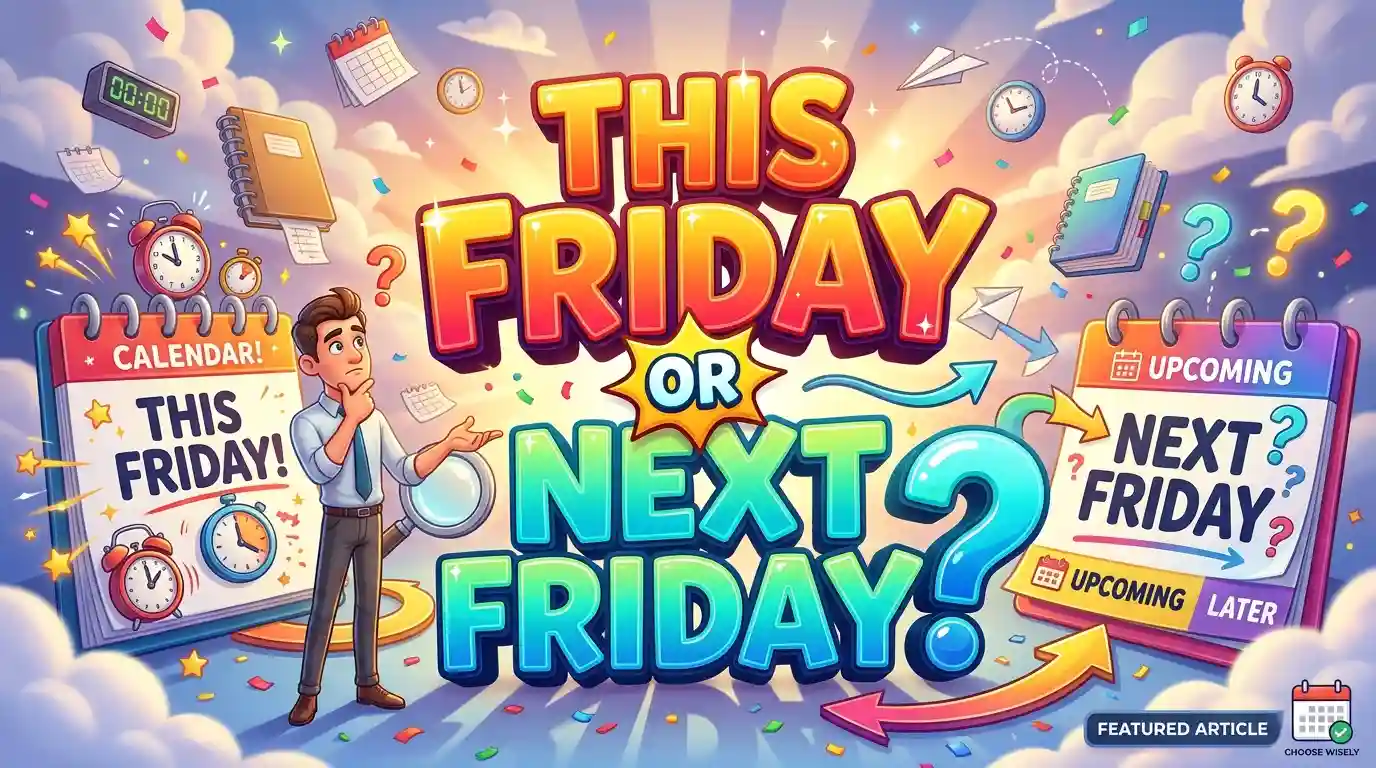
Next Friday vs this Friday? A Clear Guide to Next and This Friday

Have you ever made plans for Friday and wondered whether someone meant the coming Friday or the Friday after that? These small date phrases can cause big mix-ups. In everyday English, next Friday vs this Friday can be confusing because people do not always use these expressions in the same way.
Quick Answer
This Friday usually means the upcoming Friday in the current week. Next Friday often means the Friday of the following week, although some people use it to mean the nearest coming Friday. When discussing next Friday vs this Friday, use a specific date if you want to avoid confusion.
What Each Term Means
Both expressions refer to a Friday, but they can point to different dates. Understanding the role of each word makes it easier to arrange plans and discuss future events.
What Does This Friday Mean?
“This Friday” usually refers to the Friday in the current calendar week. It is a common way to talk about an upcoming event, meeting, or plan.
For example, imagine that today is Tuesday. If your colleague says, “Let’s review the project this Friday,” they most likely mean the Friday that is only a few days away.
The word “this” connects Friday to the current week. It helps the listener identify a date that feels close to the present.
People often use this phrase when discussing:
- Office meetings and work deadlines.
- School activities and class schedules.
- Family gatherings and social events.
- Shopping trips and weekend plans.
- Upcoming appointments.
It is a natural expression in both spoken and written English. You can use it in casual conversations, emails, and professional messages.
What Does Next Friday Mean?
“Next Friday” generally refers to the Friday of the following week. It often points to a date that comes after the nearest upcoming Friday.
For instance, if today is Tuesday, November 3, and the upcoming Friday is November 6, next Friday may refer to November 13.
However, English speakers do not always agree on this meaning. Some people use “next Friday” for the nearest Friday ahead, especially when they are speaking early in the week.
This difference can create confusion when people arrange appointments or make travel plans. Therefore, checking the actual date is a smart habit.
The Core Rule, Explained Once
The main difference between next Friday vs this Friday comes from how speakers connect a day to the current week or the following week.
“This” often identifies something connected to the present period. When you say “this Friday,” you usually mean the Friday belonging to the week you are currently experiencing.
“Next” points forward to a later period. When you say “next Friday,” many speakers understand it as the Friday in the week after the current one.
However, there is no universal rule that every English speaker follows when using “next” with weekdays. Some people treat it as the next occurrence of that weekday. Others use it to mean the occurrence after the upcoming one.
The day of the week also affects how people understand these expressions.
Consider these situations:
- Monday to Wednesday: “This Friday” usually means the Friday later in the same week.
- Thursday: Both expressions can cause confusion because Friday is very close.
- Saturday or Sunday: “This Friday” may sound like a reference to a Friday that has already passed, while “next Friday” often points to the upcoming week.
- Monday of a new week: People may disagree about whether “next Friday” means the Friday four days away or the one eleven days away.
The calendar week itself can also vary. Some calendars start on Sunday, while others start on Monday. This can affect how people divide weeks in conversation.
The safest approach is to mention the date whenever the timing matters.
Examples in Context
These next Friday vs this Friday examples cover different real-life settings, including work, travel, education, shopping, and personal conversations. Notice how the surrounding details help make the intended date clear.
- Workplace: “We have a team meeting scheduled for this Friday at 10 a.m.”
- Travel: “I am planning to visit my hometown next Friday, so I need to book my ticket early.”
- School: “The science teacher will collect our assignments this Friday.”
- Shopping: “The new collection will arrive next Friday, according to the store manager.”
- Relationships: “Would you like to have dinner with me this Friday?”
- Technology: “The software update should be ready by next Friday.”
- Healthcare: “Your dental appointment is booked for this Friday at 3 p.m.”
- Weather: “The forecast says heavy rain may arrive next Friday.”
- Entertainment: “Our favorite singer is performing this Friday at the city theater.”
- Business: “Please send the final invoice by next Friday, November 13.”
These examples show how a clear date or extra context can help people understand your plans.
Common Mistakes
When learning next Friday vs this Friday, many writers focus only on the words and forget about timing, context, and the listener’s point of view. Here are five mistakes worth avoiding.
- Using both expressions as exact synonyms
Wrong: “This Friday and next Friday always mean the same date.”
Right: “This Friday usually refers to the current week’s Friday, while next Friday often refers to the following week’s Friday.”
Reason: The expressions can have different meanings depending on the speaker. - Ignoring the current day
Wrong: “Today is Saturday, so this Friday must mean tomorrow.”
Right: “Today is Saturday, so the upcoming Friday is usually six days away.”
Reason: Saturday comes after Friday, so the current week’s Friday has already passed. - Assuming everyone follows the same calendar week
Wrong: “Everyone considers Monday the first day of the week.”
Right: “Some calendars start on Sunday, while others start on Monday.”
Reason: Different calendar conventions can affect how people understand weekly expressions. - Using next Friday without checking the date
Wrong: “Your appointment is next Friday.”
Right: “Your appointment is Friday, November 13.”
Reason: A specific date removes uncertainty when scheduling matters. - Thinking this Friday always means the nearest Friday
Wrong: “If today is Saturday, this Friday always means the Friday coming tomorrow.”
Right: “If today is Saturday, next Friday usually refers to the upcoming Friday.”
Reason: The word “this” often connects the date to the current calendar week.
Small wording choices can create confusion, just as other everyday language differences can. For example, writers may also need to understand goodbye vs good-bye when choosing the right form for a farewell.
Tricky or Edge Cases
Some situations make these expressions harder to understand. The following cases are especially useful when discussing dates with people from different regions.
When today is Thursday
Suppose someone says, “See you next Friday.” They might mean tomorrow or the Friday of the following week. Both interpretations are possible, so asking for clarification is sensible.
When today is Friday
If someone says “this Friday” on a Friday, they may mean the current day. If the conversation happens late in the evening, they might also be referring to a future Friday, depending on the context.
When discussing a deadline
Deadlines require exact dates. A message such as “Submit the report next Friday” may lead to different interpretations. Writing “Submit the report by Friday, November 13” is much clearer.
When speaking with international colleagues
People from different English-speaking regions may use weekday expressions differently. A date written in full helps everyone understand the same schedule.
How to Remember It
A simple way to remember next Friday vs this Friday is to connect “this” with the current week and “next” with the week ahead. Think of “this Friday” as the Friday linked to the week you are in. Think of “next Friday” as the following Friday, while remembering that some speakers use it for the nearest upcoming one.
You can also check the calendar before sending a message. Just as people compare soo vs so to understand spelling and meaning, checking the context of a date phrase can help you choose the right words.
Which Is More Correct or More Common?
Neither expression is grammatically wrong. Both are standard English phrases, and both are widely used in everyday conversations.
“This Friday” is often easier to understand when the speaker means the Friday in the current week. It gives the listener a useful connection to the present calendar period.
“Next Friday” is also correct, but its meaning is less predictable. Some speakers use it for the Friday after the upcoming one. Others use it for the next Friday on the calendar.
This is mainly a difference in usage and interpretation, not a difference between formal and informal grammar. You can use either phrase in professional or casual communication.
For formal emails, business schedules, travel bookings, and appointments, a full date is the better choice. It prevents unnecessary questions and helps everyone stay on the same page.
English has many expressions where context affects meaning. Similar questions appear when choosing between serpent vs snake or understanding the correct form of that’s or thats. In each case, knowing how a word works in context makes communication easier.
Quick Reference Table
This table highlights the main differences between next Friday vs this Friday and shows when each expression is most useful.
| Feature | This Friday | Next Friday |
| General meaning | Friday in the current week | Often Friday in the following week |
| Time reference | Present week | Future week |
| Common use | Nearby plans and events | Later plans and events |
| Grammar | Correct | Correct |
| Possible confusion | When the current Friday has passed | Whether it means the nearest or following Friday |
| Best for clear scheduling | Add the calendar date | Add the calendar date |
FAQs
1. Does next Friday mean this coming Friday?
Not always. Some people use “next Friday” for the nearest upcoming Friday, while others mean the Friday of the following week. The calendar date can clear up the confusion.
2. Is this Friday the same as coming Friday?
Usually, yes. Both expressions commonly refer to the nearest Friday in the current week when that day is still ahead. However, the exact meaning can depend on the conversation.
3. Which is correct, next Friday vs this Friday?
Both are grammatically correct. The right choice depends on which Friday you want to describe and how your listener understands the phrase.
4. How do Americans use next Friday?
Many American English speakers use “next Friday” to mean the Friday of the following week. However, some also use it for the nearest upcoming Friday, so it is best to confirm the date.
5. How can I avoid confusion when making Friday plans?
Include the weekday, month, and date in your message. For example, write “Friday, November 13” instead of relying only on “next Friday.” This makes your plans clear to everyone.
Conclusion
Understanding next Friday vs this Friday can make everyday communication much easier. Both expressions are correct, but they do not always point to the same date. “This Friday” usually refers to the Friday in the current week, while “next Friday” often refers to the Friday in the following week. However, personal habits and regional usage can change how people interpret these phrases.
When making important plans, do not leave the date open to interpretation. Include the full calendar date in emails, messages, and appointments. A small detail can prevent missed meetings, booking errors, and unnecessary misunderstandings. Clear language helps everyone stay organized and confident when discussing plans.
[…] For related examples of how small differences affect everyday expressions, see lunchtime vs lunch time and next Friday vs this Friday. […]