Don't miss our holiday offer - up to 50% OFF!

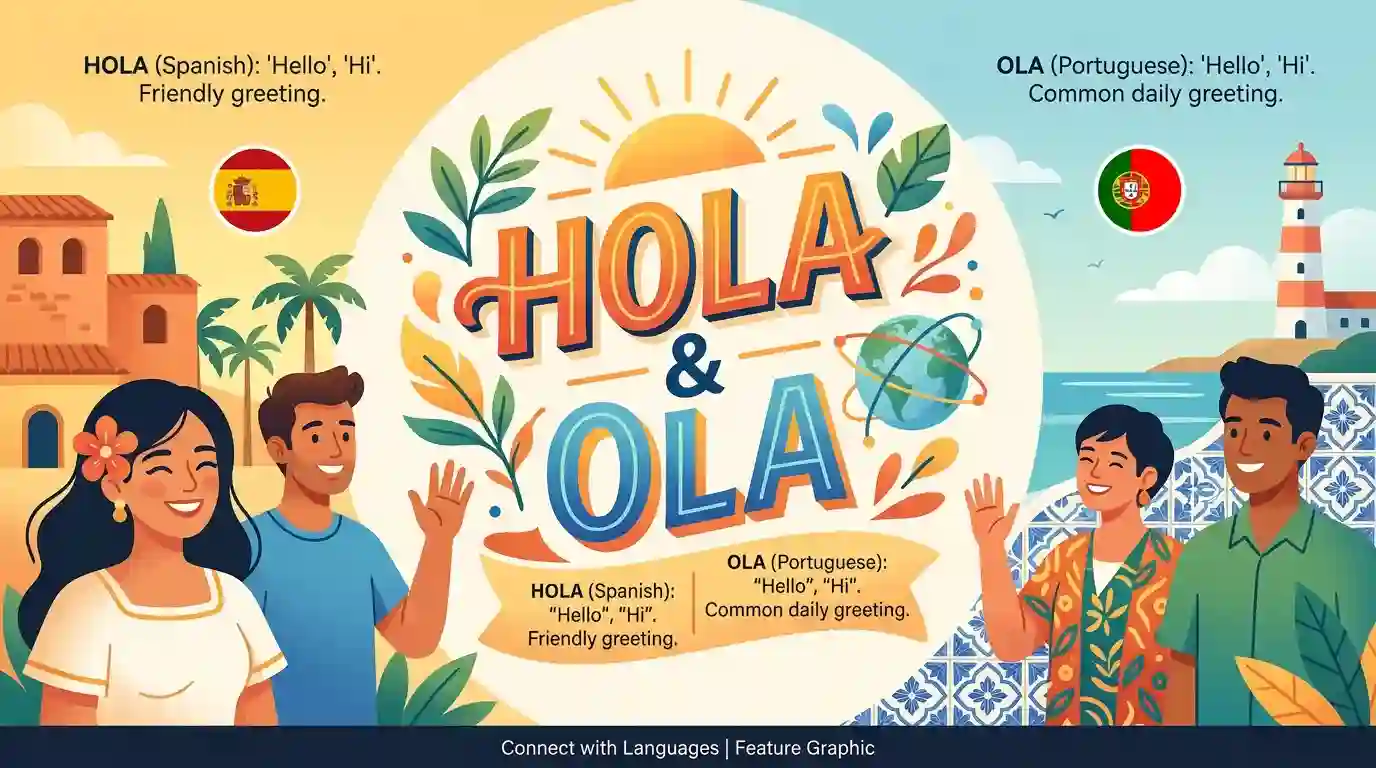
Hola or Ola: How to Use Each Word Correctly

A quick greeting can create an unexpected spelling question. If you have ever seen “hola” and “ola” and wondered whether both are acceptable ways to say hello, you are not alone. The difference between hola and ola comes down to language and meaning: one is a Spanish greeting, while the other is a standard English word with a completely different meaning.
Quick Answer
Hola or ola are not interchangeable. “Hola” is the Spanish word for “hello,” while “ola” is an English noun referring to a large wave or a surge, especially in a crowd.
What Each Term Means
Although the two words look and sound similar, they belong to different vocabulary systems and serve different purposes. Understanding where each one comes from makes the distinction much easier to remember.
Hola
“Hola” is a Spanish greeting that means “hello” or, depending on context, “hi.” Spanish speakers use it in everyday conversations, messages, introductions, and other informal or neutral situations.
For example, someone might write “¡Hola!” when answering a message from a friend or greeting someone they have just met. The word can stand alone as a greeting, much like “hello” in English.
It is also common to see “hola” in English-language conversations when someone intentionally uses a Spanish expression. That usage is perfectly understandable when the writer wants to greet someone in Spanish or add a Spanish touch to the conversation.
Ola
“Ola” is an English noun, although it is much less common than “wave” in ordinary conversation. It can describe a large wave or a wave-like movement, particularly the coordinated rising and falling of people in a stadium.
The term often appears in descriptions of a crowd performing a “wave,” such as spectators standing one after another around an arena. It can also occur in technical or specialized contexts involving wave-like motion.
So, although the spelling resembles the Spanish greeting, “ola” does not mean “hello” in standard English.
The Core Rule, Explained Once
The central distinction between hola and ola is not a matter of choosing between two English spellings. The words have different origins, meanings, and grammatical roles.
“Hola” belongs to Spanish and functions as a greeting. When you want to say hello in Spanish, “hola” is the appropriate form. It does not become “ola” simply because the initial h is silent in Spanish pronunciation.
“Ola,” on the other hand, is an English noun. Its meaning relates to a wave or wave-like movement rather than a greeting. In a sentence such as “The fans started an ola,” the word refers to the coordinated movement through the crowd.
This distinction also explains why replacing one with the other can change a sentence completely. The similarity in pronunciation may cause confusion, but spelling follows meaning and language rather than sound alone.
Another useful point is that Spanish does not pronounce the “h” in “hola.” That silent letter can make the word sound similar to “ola,” especially to English speakers who are hearing the terms rather than seeing them written. The spelling, however, remains “hola.”
Examples in Context
The examples below show how hola or ola can appear in different real-life settings, from casual conversation and travel to sports and writing.
- Text message: Hola, ¿cómo estás?
- Travel: A traveler smiled and said hola when entering the small café in Madrid.
- Introduction: Hola, me llamo Daniel.
- Social media: She posted “Hola everyone!” before sharing her vacation photos.
- Language learning: The first Spanish greeting many beginners learn is hola.
- Sports: The supporters created an ola that moved around the stadium.
- Crowd description: A giant ola swept through the spectators after the winning goal.
- News writing: The stadium crowd launched an ola during the halftime celebration.
- Event report: The ola traveled around the arena several times.
- Spanish conversation: He answered the phone with a cheerful hola.
Common Mistakes
Confusion usually happens because the two words can sound alike to an English speaker. These mistakes are easy to correct once you connect each spelling with its meaning.
- Wrong: “Ola! How are you?”
Right: “Hola! How are you?”
Use “hola” when the intended meaning is the Spanish greeting. - Wrong: “The fans said a hola around the stadium.”
Right: “The fans created an ola around the stadium.”
“Ola” can describe the wave-like movement of spectators. - Wrong: “I learned that ola means hello in Spanish.”
Right: “I learned that hola means hello in Spanish.”
The Spanish greeting includes the silent “h.” - Wrong: “Hola” is simply another English spelling of “ola.”
Right: The two words have separate meanings and linguistic origins.
Similar pronunciation does not make them interchangeable. - Wrong: Writing “ola” when quoting a Spanish greeting.
Right: Keep the original Spanish spelling, “hola.”
Preserving the correct spelling matters when using words from another language.
Tricky or Edge Cases
There is one useful edge case worth knowing: “ola” may appear in English writing because of specialized vocabulary or descriptions of crowds, while “hola” may appear inside an otherwise English sentence as a borrowed Spanish greeting.
A writer might therefore use “hola” in an English article without writing Spanish throughout the rest of the piece. Likewise, an English sports report can use “ola” when describing a coordinated crowd movement. In both cases, context makes the intended meaning clear.
Pronunciation can still cause confusion because the “h” in Spanish “hola” is silent. If you only hear the word, you may not know which spelling the speaker intends. Once you see the context, however, the distinction becomes straightforward.
How to Remember It
A simple way to remember hola or ola is to connect the extra letter with the greeting: “Hola” has the H that English readers associate with “hello.” Think of “ola” separately as a wave moving through a crowd. If you mean “hello” in Spanish, choose “hola”; if you mean a wave-like movement, “ola” may be the word you need.
Which Is More Correct or More Common?
Neither word is a “more correct” spelling of the other because they do not perform the same job. “Hola” is correct when you are using the Spanish greeting, whereas “ola” is correct when the English noun fits the intended meaning.
In everyday English conversation, “hola” is much more likely to appear than “ola” because people frequently borrow familiar greetings from other languages. “Ola” has a narrower use and tends to appear in contexts involving crowds, sports, or wave-like movements.
For an English speaker trying to greet someone in Spanish, using “ola” would therefore be an error. The silent “h” can make the correct word seem surprising at first, but Spanish spelling retains that letter even though it is not pronounced.
The safest approach is to identify the language and meaning before choosing the spelling. If the word is functioning as a greeting, use the Spanish form; if it describes a wave or coordinated crowd movement, the English noun may be appropriate.
Quick Reference Table
This table provides a quick way to distinguish the two forms without relying on pronunciation alone.
| Word | Language | Meaning | Typical Use |
| Hola | Spanish | Hello or hi | Greetings and conversation |
| Ola | English | A wave or wave-like movement | Crowds, sports, specialized descriptions |
FAQs
These common questions address the spelling, pronunciation, meaning, and everyday use of the two easily confused words.
Is “ola” another spelling of “hola”?
No. “Hola” is the Spanish word for “hello,” while “ola” has a different meaning in English and is associated with a wave or wave-like movement.
Why does “hola” sound like “ola”?
The “h” in Spanish is silent, so “hola” is pronounced without an audible h sound. That makes it sound similar to “ola” when spoken aloud.
Does “ola” mean hello in Spanish?
No. The standard Spanish greeting is “hola.” The absence of the written “h” changes the word and does not represent the normal Spanish spelling.
Is “hola” used in English?
Yes. English speakers often use “hola” when greeting someone in Spanish or when incorporating a Spanish expression into an English conversation.
What does “ola” mean in English?
“Ola” can refer to a large wave or the wave-like movement created by people in a crowd. It is considerably less common in everyday English than the word “wave.”
Conclusion
The difference between hola or ola becomes simple once you focus on meaning rather than pronunciation. “Hola” is the Spanish greeting used to say hello, while “ola” is an English noun associated with a wave or wave-like crowd movement. The silent Spanish “h” explains why the two can sound so similar even though their meanings are unrelated. When you are writing, checking the language and context first will help you choose the correct spelling with confidence.
[…] has many other word comparisons worth learning. For instance, the guides on soo vs so and hola vs ola explain how spelling and context influence correct […]